
St. Helena Parish Sex Offender Checks
The primary public channel is the Louisiana State Sex Offender and Child Predator Registry, operated by Louisiana State Police BCII. Access begins only after the reader accepts its conditions of use. Search St. Helena Parish first, then repeat the search with Greensburg, Montpelier, a ZIP code, or an address. The registry depends on courts, corrections offices, sheriffs, and police departments to send updates, so it does not promise that every entry is complete or current.
The federal National Sex Offender Public Website is a second, free channel when a concern may cross state lines. The St. Helena Parish Sheriff is the practical phone fallback for a local registration question. These channels answer related but distinct questions. None can certify that a person or address poses no risk merely because one query returns no match.
Selecting St. Helena in the Registry
The official registry entry page shows the conditions and public search route.
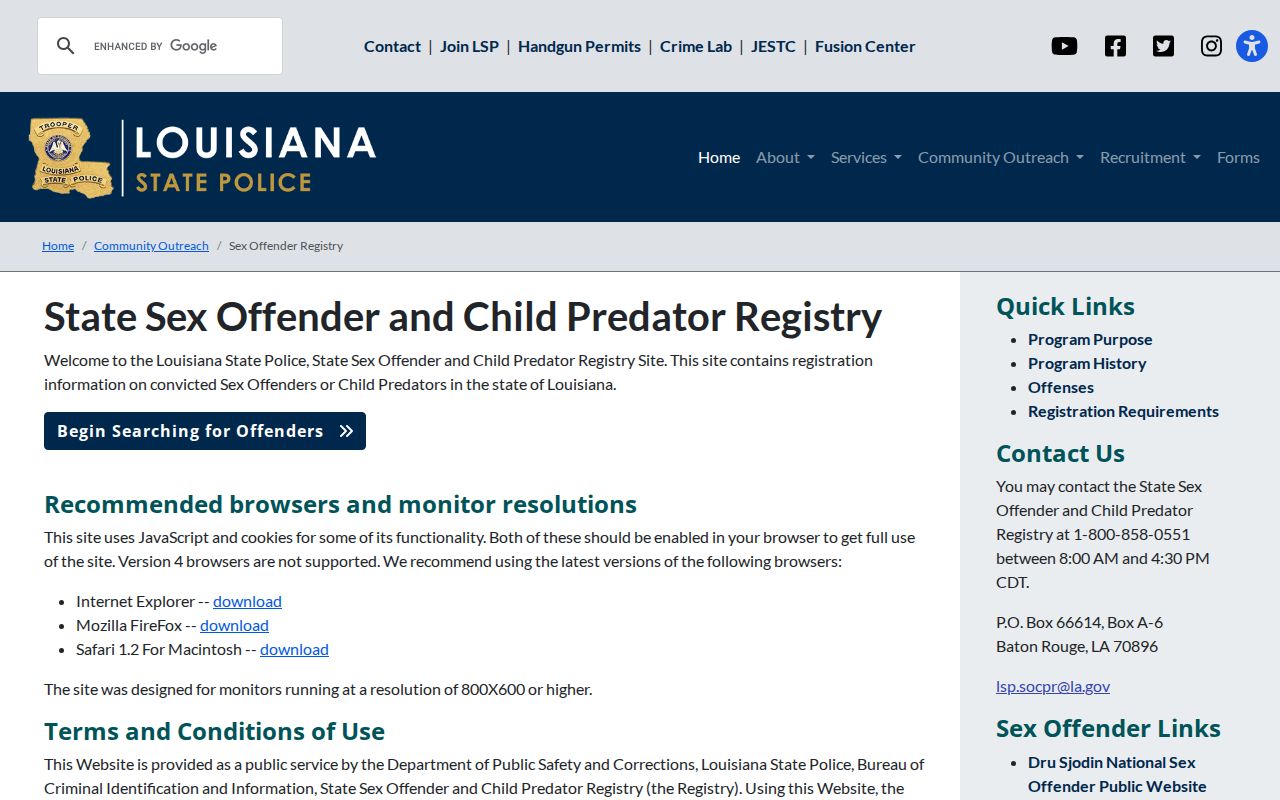
Its conditions frame each result as reported safety information with limits.
The parish filter is more reliable than a city-only search for rural addresses. A person associated with Greensburg may have a postal address outside town limits, while a Montpelier result may be indexed by ZIP or street rather than the expected village label. Begin broadly, then narrow the result set. Keep spelling variants and known aliases at hand before deciding that no entry exists.
- Open the official Louisiana registry and read and accept its conditions of use.
- Search an exact surname and first name, then repeat with any known alias or alternate spelling.
- Select St. Helena Parish and test city, ZIP, and address-centered controls where available.
- Open the matching official profile, inspect its reporting details, then repeat through NSOPW if another state may matter.
Louisiana Registry Searches
The U.S. Department of Justice provides the national public registry search.
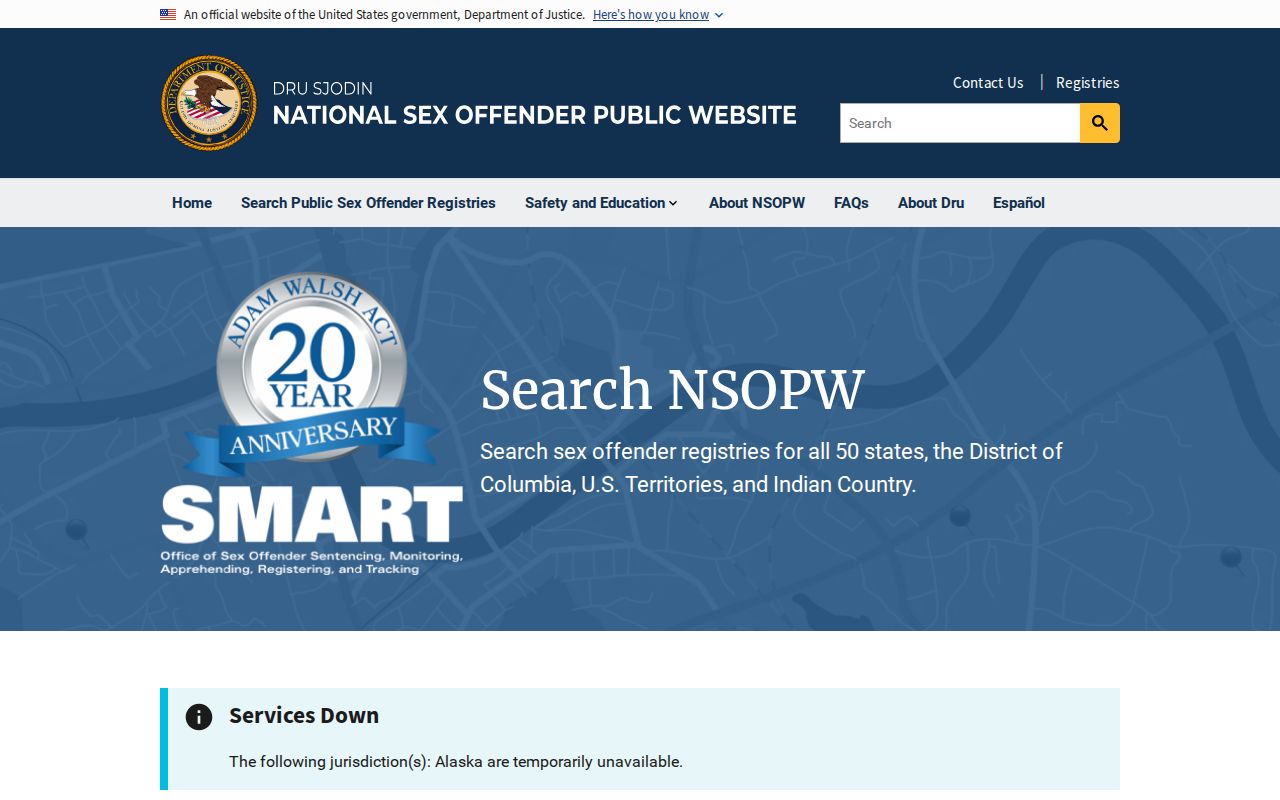
This layer helps when location history crosses Louisiana's border.
The Louisiana search is free, but entry is gated by consent. No single field is enough in every case. Name searches can miss an alias, and a geographic query can miss a recently reported move or a rural mailing label. The verified controls below come from the official form inventory, not from a copied private profile.
| Field | Type | Required | Use |
|---|---|---|---|
| Conditions of use | Consent button | Yes | Opens the search |
| Last and first name | Text | Conditional | Try aliases and spelling variants |
| Address | Text | Conditional | Starts a geographic search |
| City | Text or list | No | Try Greensburg and Montpelier |
| ZIP code | Text | No | Helps with rural location labels |
| Parish | Dropdown | No | Select St. Helena |
Why St. Helena Registry Results Can Lag
The registry itself warns that its information arrives from other agencies and may not be timely. A court creates the conviction and order. Local law enforcement gathers registration data, including fingerprints, and forwards required information to BCII under R.S. 15:545. Corrections and other agencies also contribute. That chain makes the public record useful, but not instantaneous.
If an address appears stale, preserve the profile URL and the date it was viewed. Contact the registry or the St. Helena Parish Sheriff rather than confronting the listed person or anyone at the address. A blank result may reflect an alias, spelling, location label, reporting lag, lawful relief, or no public-registration duty. It is not a safety certificate.
Registry Profiles: What They Show
R.S. 15:542 identifies who registers and the initial duties.
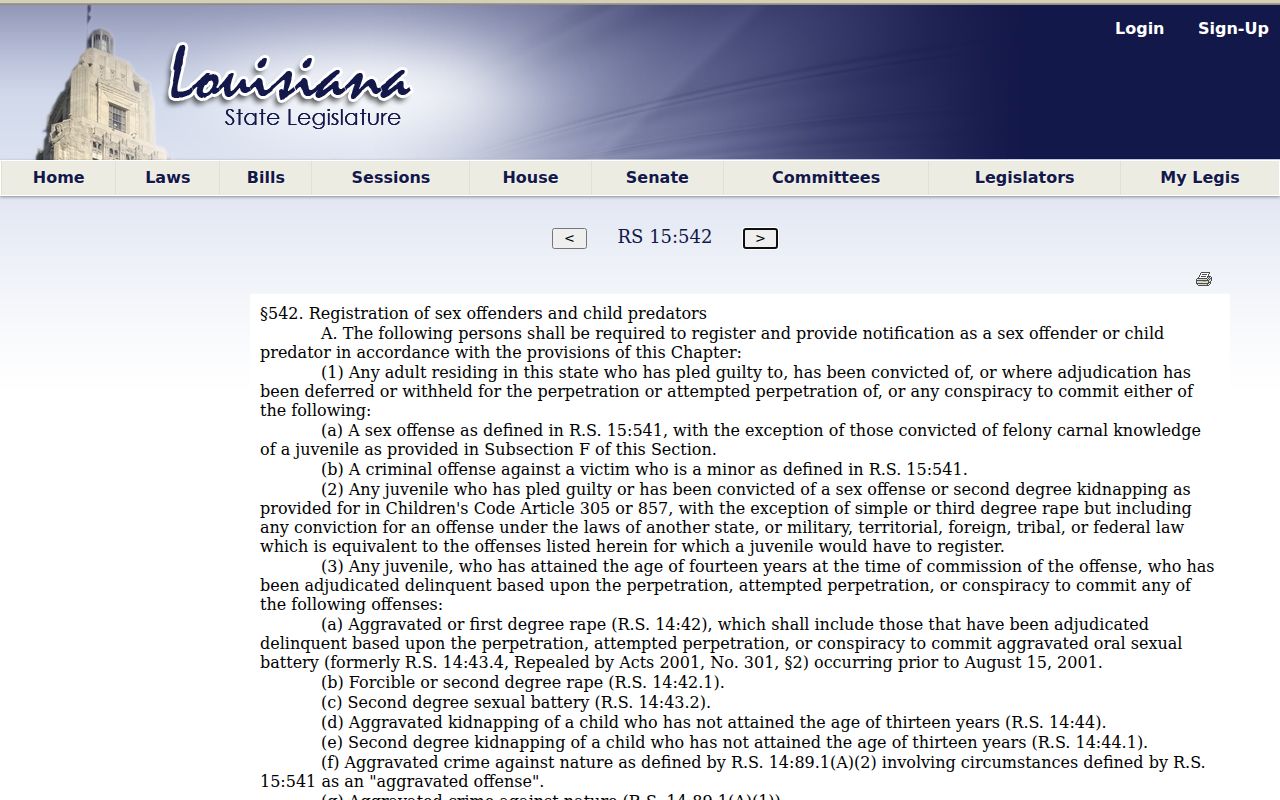
A profile is part of a legal reporting system, not an arrest list.
An official profile combines identifying details with reported locations and qualifying conviction information. Read the whole profile before matching a person. A shared name alone is weak evidence, and even a map marker should be checked against the reporting or verification details shown by the registry.
| Name & Aliases | Reported legal name and alternate names |
|---|---|
| Photo & Description | Photo, physical descriptors, and identifying features where collected |
| Reported Locations | Residential, work, or school locations as publication rules allow |
| Offense | Qualifying offense, statute, conviction date, and jurisdiction |
| Tier & Duration | Registration category and applicable term |
| Status | Registration or compliance information and reported verification data |
| Other Details | Reported vehicles or other identifying data where collected |
St. Helena Registry Versus NSOPW
The Louisiana registry is the best first source for the state's own terminology, tier rules, and reported St. Helena Parish information. NSOPW, operated by the U.S. Department of Justice, federates public registry searches across participating jurisdictions. It is valuable when someone recently lived elsewhere or a name search may span state lines.
Run both searches with the same careful identifiers, but do not expect identical formatting or timing. Louisiana's official profile remains the source for Louisiana-specific duties. If the services disagree, use the contact information on the state registry and ask the St. Helena Parish Sheriff about local reporting rather than choosing the result that seems more convenient.
Registration Levels and Duties in Louisiana
The duration statute supplies the legal basis for Louisiana terms.
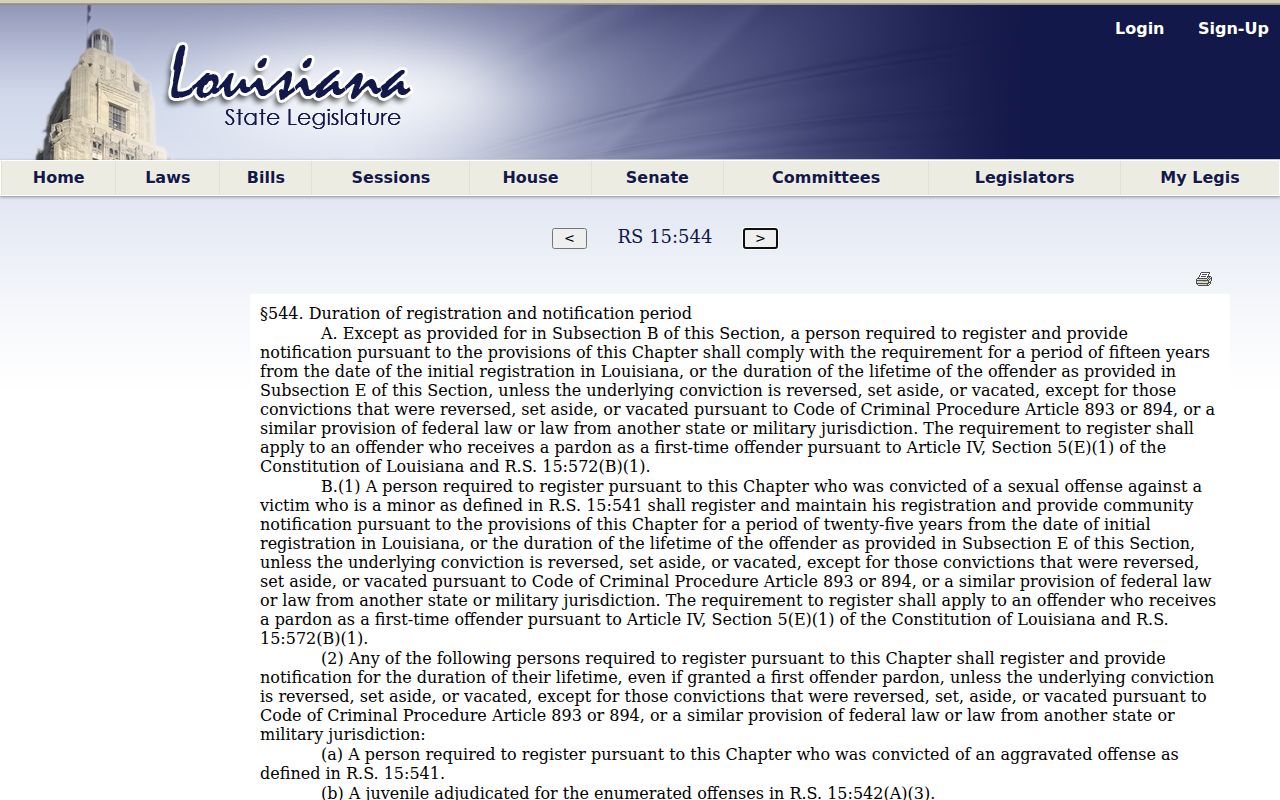
Its exceptions and tolling rules matter before estimating an end date.
Louisiana R.S. 15:544 controls registration duration, exceptions, tolling, restart rules, and possible relief. The official tier and offense table links categories to verification frequency. Never assign a tier from an offense nickname. The actual conviction statute and the official classification control.
| Louisiana category | General duration | Verification |
|---|---|---|
| Tier I or neither aggravated nor minor-victim category | 15 years; possible reduction to 10 by a qualifying statutory motion | Annually |
| Tier II or sexual offense against a minor | 25 years | Semiannually |
| Tier III, aggravated, repeat, and other lifetime categories | Life | Quarterly |
Calling the St. Helena Registry Counter
R.S. 15:545 sets local fingerprint and reporting duties.
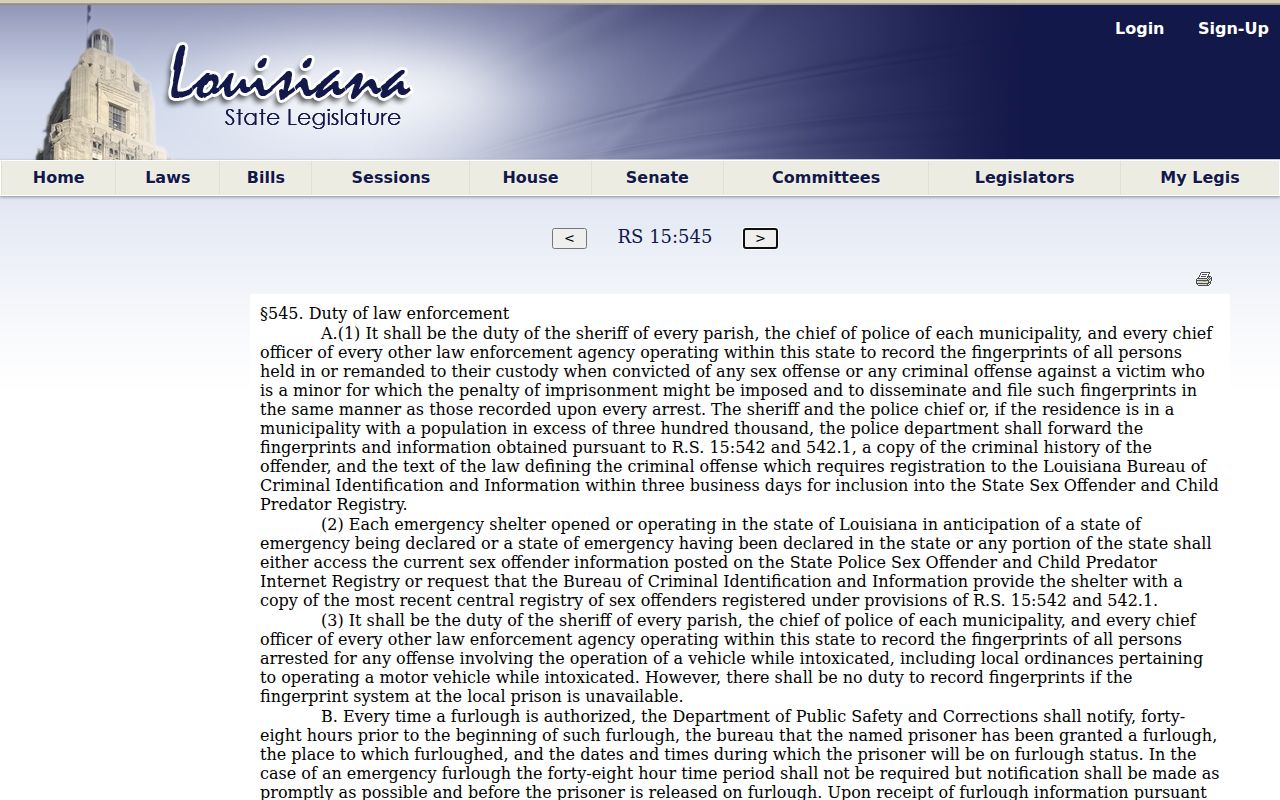
Local registration and the BCII public system are linked but distinct.
R.S. 15:542 generally requires in-person registration within three business days after establishing Louisiana residence, subject to the law's detailed triggers. In St. Helena Parish, the appropriate local law-enforcement authority handles the in-person step and sends information through the statutory reporting process.
The sheriff does not publish the exact registration counter, appointment procedure, document list, or local fee rule. Call (225) 222-4413 before traveling and ask specifically for the sex-offender registration contact. The sheriff's administration is at 19 N. First Street in Greensburg, but a caller should confirm the proper counter and current hours rather than assuming the general office schedule applies.
St. Helena Registry Duration Questions
The official LSP offense list organizes tiers and verification.
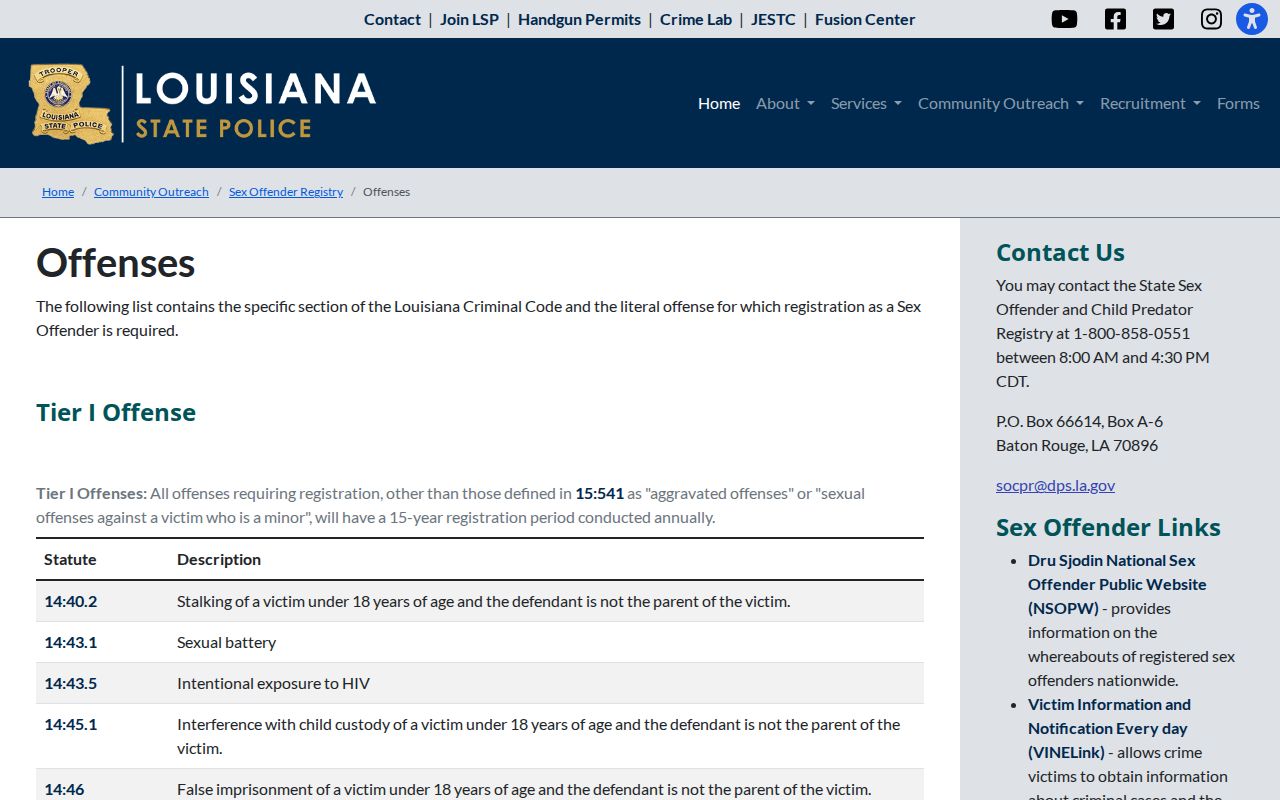
Louisiana categories take priority over summaries from other states.
A Tier I term is generally 15 years. The possible reduction to ten years is not automatic. It depends on a statutory motion and qualifying clean-record and treatment conditions. Tier II's general Louisiana term is 25 years, while aggravated, repeat, and other listed Tier III categories can require lifetime registration. Time may also be affected by statutory tolling or restart rules.
That is why a result should be read against R.S. 15:544 and the official offense list, not a generic national chart. Questions about an expected end date belong with the registry and, when needed, the court record that establishes the conviction. A public searcher should not declare that a profile ought to have disappeared based only on elapsed calendar years.
Using Registry Information Lawfully
The registry supports family safety, neighborhood awareness, and informed planning. It does not grant permission to threaten, shame, track, or confront anyone. Suspected noncompliance should be reported to law enforcement, not posted as an accusation on social media. The state conditions also warn against relying on the database as a complete or perfectly current account.
Use registry data safely: Harassment, threats, vigilantism, or using registry information to commit a crime is unlawful under Louisiana law. Follow the official conditions and report concerns to law enforcement.
For registry questions, Louisiana State Police lists 1-800-858-0551, 8:00 a.m. to 4:30 p.m. Central, and P.O. Box 66614, Box A-6, Baton Rouge, LA 70896. For the broader parish record path, the St. Helena Parish criminal history overview explains how court, jail, and repository records remain separate.